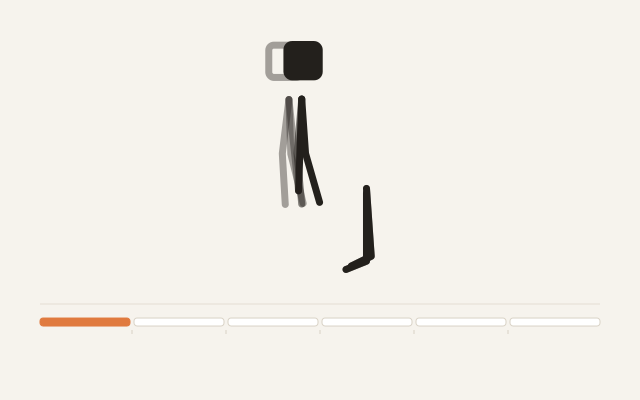
The upper trapezius is the muscle that holds your head up all day and the one that a desk worker can feel without looking for it. Five minutes of gentle, anchored work will not undo a decade of it, but it reliably takes the edge off — provided you stop trying to stretch the neck from the neck alone. Every step here anchors the shoulder first, because a trapezius that is being pulled from both ends does not lengthen.
Seated neck tilt
Holding · right side
5:00
1 / 6
Sit on the left hand, tilt the head right, and let the weight of the head do everything. The left shoulder should feel like it is being pulled down, not pushed.
6 steps · 5 min
Before you start General movement information, not medical advice. Neck pain after an accident, neck pain with dizziness, nausea, vision changes or any numbness in the arm, needs urgent medical assessment.
Step table
Step
Hold
Side
What you should feel
1. Seated neck tilt
45s + 5s
right side
Sit on the left hand, tilt the head right, and let the weight of the head do everything. The left shoulder should feel like it is being pulled down, not pushed.
2. Seated neck tilt
40s + 10s
left side
Sit on the right hand, tilt left. Keep the face pointing straight ahead — turning the chin toward the chest changes which muscle you are on.
3. Ear to shoulder, hand assist
45s + 5s
right side
Right hand resting lightly on the left side of the head, right shoulder anchored. Let the hand be a suggestion, never a lever.
4. Upper trap lean
40s + 10s
left side
Left hand holds the chair edge, head tilts right. This is the anchored version of the same movement, and it reaches further down the shoulder than the free one does.
5. Towel neck release
45s + 5s
both sides
Towel around the back of the neck, a light pull upward and slightly forward, chin tucked a little. Twenty seconds, then change the angle slightly and repeat.
6. Slow shoulder rolls
35s + 15s
both sides
Finish with eight rolls each way, breathing out each time the shoulders come down, and notice whether the neck feels different from when you started.
How to run this sequence
Anchor the shoulder or nothing happens
The upper trapezius runs from the base of the skull to the outer end of the collarbone. If the shoulder is free to rise, tilting the head simply lifts the whole shoulder with it and the muscle never changes length. So: sit on your hand, hold the chair edge, or hold the edge of the mat. The anchoring is the exercise; the head tilt is just the direction.
Gentle is the point, not a compromise
The neck has more joint receptors per square centimetre than almost anywhere else, which is why a light, long hold changes it more than a hard one. Three things to hold on to:
The stretch should feel like a wide, warm pull on the side of the neck, never a sharp line and never anything into the arm.
Thirty to forty percent of your maximum effort is the whole range of useful intensity here. More than that and the neck muscles contract to protect themselves.
Never take the neck into a full circle or a big backward tilt. The joint at the top of the neck is not built for it, and that is the one movement that produces serious problems.
If it tingles into the arm
Tingling, numbness or a line of electricity into the arm or hand means a nerve is involved and is not a stretching sensation. Come out of the position immediately, sit upright with the head over the shoulders, and if it does not settle within a minute or two or it repeats on the next attempt, have it looked at. Nerves in the neck do not respond to being pushed, and this sequence has no step that requires you to work through it.
Questions about this sequence
Should I use heat or ice?
Heat before, if the area feels tight and cold. Ice has a place for something that is acutely inflamed, which is not the same thing as a muscle that has been held in one position all day. If you are unsure which you have, start with heat and movement.
How do I know if it is tension or something structural?
Tension changes with position, time of day and stress, and it eases with movement. Structural problems keep producing the same signal regardless of what you do, and they usually come with a loss of range, pain at rest or a nerve symptom. Persistent and unchanging is the signal to get assessed.
Does a neck massage work as well?
It feels better and does less. Massage temporarily reduces the sensation; moving the muscle with the shoulder anchored changes what the muscle does. The best combination is two minutes of massage to take the edge off, then this sequence while the area is warm.
An ankle that cannot bend forward properly changes everything above it: the knee tracks badly, the hip takes a longer stride than it wants, and the calf works overtime on every step. This ladder measures the ankle first, then moves it in the two directions it actually needs — forward over the toes, and up and down through the heel — and finishes by putting weight through the new range so it stays.
The shoulder blade is a bone that floats on the back of the ribcage and is supposed to slide upward, downward and around it. A day of typing holds it in one place for hours, and the muscles that normally move it stop being asked. This sequence spends five minutes asking, in a small range, with almost no load — which is exactly what a shoulder that has been still all day can accept.
A wall gives you something a floor cannot: instant feedback. If your mid-back does not move, the wall will not let you pretend otherwise, because your lower back has to lift off it. This sequence uses that feedback to open the front of the chest and the front of the shoulders — the two places that a day of typing pulls forward and holds there.