Skip to the player
Unkink
timed stretching, cued by the second

Twenty Minute Full Body Evening Sequence

20 min12 stepsGentleFull bodyPublished 30 Oct 2026

This is the long, unhurried version of the bedtime sequence, with the whole body covered and nothing that requires effort. It goes from the spine, through the hips, into the legs and back to the spine, and the last three steps are arranged so that you end flat on your back with nothing left to do but get up and go to bed. Nothing in it is meant to change your range.

Cat and cow
Cat and cow
Holding · both sides
20:00
1 / 12
Eight slow rounds, eyes closed if you like. This is where the day starts to come off — do not rush it.
12 steps · 20 min

Before you start
General movement information, not medical advice. Persistent insomnia, or pain that regularly wakes you at night, needs medical assessment rather than a longer evening routine.
Step table
StepHoldSideWhat you should feel
1. Cat and cow95s + 5sboth sidesEight slow rounds, eyes closed if you like. This is where the day starts to come off — do not rush it.
2. Child's pose with reach95s + 5sboth sidesSit back to the heels, arms forward, forehead down. A brick under the forehead makes this comfortable enough to stay in for a long time.
3. Supine twist95s + 5sright sideKnees to the right, arms wide, left shoulder heavy. Five slow breaths, and let the exhale be longer than the inhale.
4. Breath with hands on ribs95s + 5sboth sidesFlat on the back, hands on the lower ribs, six slow breaths. The ribs are what a day of shallow breathing has stopped moving.
5. Butterfly95s + 5sboth sidesSoles together, spine long, knees falling open with cushions under them. Nothing to push, nothing to achieve.
6. Figure four95s + 5sright sideRight ankle over the left knee, reach through and draw the legs in. Head and shoulders stay down — this is not a position to watch.
7. Figure four95s + 5sleft sideLeft ankle over the right knee. Let the whole body get heavier with each exhale rather than pulling the legs closer.
8. Happy baby95s + 5sboth sidesKnees wide, holding the feet or the shins, tailbone heavy. Rock very slightly side to side if the lower back wants it.
9. Supine knee hug95s + 5sboth sidesBoth knees in, tailbone heavy, small slow rocks. This is the decompression after everything else — do not skip it to get to the stretch.
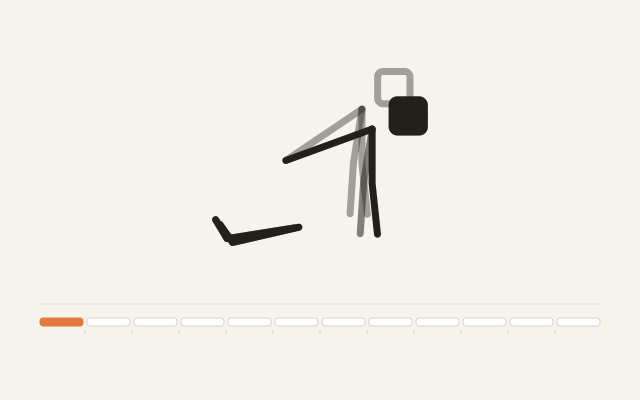
10. Seated evening fold95s + 5sboth sidesSit with the legs long and fold forward slowly, letting the head hang. Wherever you land is where you land — nothing here is a measurement.
11. Supine full stretch95s + 5sboth sidesArms overhead, legs long, stretch everything for five seconds, then release. Three rounds, and let the last one end with the whole body flat.
12. Long supine hold95s + 5sboth sidesStay flat for the full hundred seconds, arms beside you, breathing slowly. When the bell goes, get up and go to bed — there is nothing left to do here.

How to run this sequence

The shape of the twenty minutes

The sequence alternates between the spine and the hips rather than doing one and then the other, because that is the order the body asks for when it is tired — a long hold in one area is followed by a long hold somewhere else, which keeps the attention moving:

  • Steps one to four: spine and ribcage, including the one twist in the sequence.
  • Steps five to eight: hips and glutes, alternating sides, each side getting two positions.
  • Steps nine to twelve: legs, then a long supine finish that includes the only stretch that is held for the full hundred seconds.

Why it is gentle on purpose

A body that is about to sleep responds badly to being challenged. Everything here is held at a range where the breath stays slow, and the effort never rises above what you would use to reach for a cup of tea. If you find yourself working at a position, the sequence is being done wrong — come out of it by a third and stay there.

The one thing worth doing properly

If you take nothing else from these twenty minutes, take the supine twist and the knee hug at the end. They decompress the lower back after a day of load, they are the two positions most people fall asleep in, and they cost almost no effort. Everything before them is preparation for being able to lie down and stay there.

Questions about this sequence

Can I do this every night?

Yes — unlike the deep hip sequences, nothing here produces enough of a stimulus to need recovery. The only caution is that a long evening routine can become a reason to delay sleep; if it is past your bedtime, do the last three steps only and go to bed.

What if I fall asleep halfway through?

Then it worked. Put the mat somewhere you can sleep, or set yourself up so that the last steps are already lying down. Do not turn it into a task you have to complete before you are allowed to sleep.

Is it better to do this or the shorter bedtime sequence?

The short one on a normal night, this one when you have the time and the day was heavy. Twenty minutes of floor time in the evening only helps if you are not resenting it — a five-minute sequence you actually do beats a twenty-minute one you avoid.

Other sequences that pair well

Fifteen Minute Full Body Morning Sequence — Preview rail

Fifteen Minute Full Body Morning Sequence

15 min10 stepsStandardFull body

A morning sequence has one job the evening ones do not: it has to wake up a spine that has been unloaded for eight hours without pushing it into positions it is not ready for. That is why this one starts with the smallest movements and arrives at the biggest ones only after the whole body has been through a smaller version of each. Fifteen minutes, all four areas, and no step you have to be warm to do.

Ten Minute Desk Break, Whole Body — Preview rail

Ten Minute Desk Break, Whole Body

10 min8 stepsGentleFull body

This is the sequence to run when you have been still for too long and nothing in particular hurts. It touches every area in the order the body asks for them — spine, hips, legs, shoulders — and it uses only a chair and a wall, so there is no reason for it not to happen. It is deliberately gentle: the goal is to interrupt stillness, not to train.