Skip to the player
Unkink
timed stretching, cued by the second

Fifteen Minute 90/90 Hip Flow

15 min10 stepsStandardHipsPublished 28 Sep 2026

The 90/90 position puts both hips at a right angle at the same time, which is the one shape that trains internal and external rotation together rather than one after the other. This sequence builds from the basic switch into the positions that use it — pigeon, lunge, frog — and back, with a glute bridge in the middle to make sure the hip is still doing work rather than only being stretched.

Cat and cow
Cat and cow
Holding · both sides
15:00
1 / 10
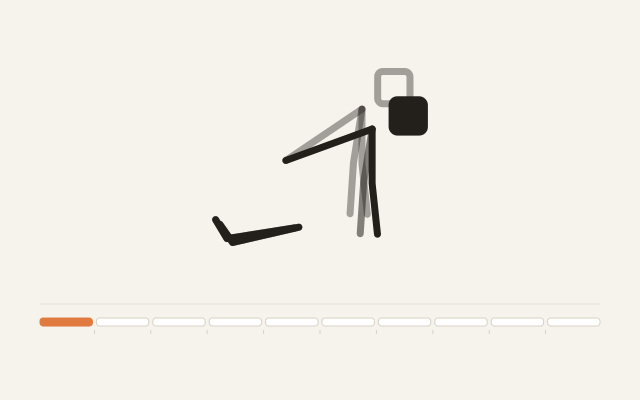
Six slow rounds. The hips get more out of this sequence if the spine is already moving before you ask the pelvis to turn.
10 steps · 15 min

Before you start
General movement information, not medical advice. Diagnosed hip impingement, a labral tear or a hip replacement makes the end-range positions here inappropriate without clearance.
Step table
StepHoldSideWhat you should feel
1. Cat and cow85s + 5sboth sidesSix slow rounds. The hips get more out of this sequence if the spine is already moving before you ask the pelvis to turn.
2. 90/90 switch, slow85s + 5sboth sidesFive slow switches, hips back, knees travelling through the middle. Spend four seconds in the middle of each transition — that is the part being trained.
3. 90/90 lean, front shin85s + 5sleft sideLeft shin in front. Lean over the left shin with a long spine — the stretch is in the back hip, and the left knee should feel nothing.
4. 90/90 lean, back hip85s + 5sright sideRight shin in front now. Sit on the brick if the right hip lifts — the whole position collapses when one hip is off the floor.
5. Pigeon85s + 5sleft sideLeft shin across with the knee out to the side, right leg back. Upright is enough — this is a rotation sequence, not a folding one.
6. Pigeon85s + 5sright sideRight side. Check the right knee is bent, not the shin lying flat — a flat shin pushes the rotation into the knee joint.
7. Glute bridge85s + 5sboth sidesFeet down, hips up, five slow lifts. Nothing else in this sequence loads the glute, and a hip that is only ever stretched stops being able to work.
8. Low lunge85s + 5sright sideRight knee down, left foot forward. After all that rotation, this is the first step that asks the hip to extend — expect it to feel different from usual.
9. Frog rock85s + 5sboth sidesKnees wide, feet wide, rock back and forward slowly. Wide and shallow: the inner thigh range is smaller than people expect and does not respond to force.
10. Butterfly, upright85s + 5sboth sidesSoles together, sitting tall, holding the feet. Finish upright rather than folded so the last thing the hips feel is length, not compression.

How to run this sequence

Why rotation, not just length

A hip that can lengthen but not rotate will always find a way to avoid the positions you put it in — turning the knee out in a squat, hiking the hip in a lunge, twisting the lower back in a fold. Rotation is the capacity that makes the other ranges usable. Fifteen minutes of rotation work twice a week changes how the hips behave in everything else, which is why this sequence exists separately from the deep stretch sequences.

Getting the 90/90 right

The position is easy to set up wrong and impossible to fix once you are in it:

  • Both knees at right angles, both shins on the floor, both sitting bones down. If one hip is off the floor, sit on the brick.
  • Sit tall before you lean. The lean is the second half of the position, not the whole thing.
  • In the switch, keep the weight back and move the knees through the middle rather than hopping from one side to the other. The slow transition is where the range is built.

The difference between a stretch and a pinch

The 90/90 puts the front of the back hip and the outside of the front hip under tension at the same time, which is exactly where people meet a pinch. If you feel a sharp block at the front of the hip as you lean forward, tuck the tailbone more and lean less — the sensation should stay in the glute and the outside of the hip. A pinch that does not change when you change the pelvis angle is a joint signal, not a tissue one, and it means the range for today is smaller than the range in the plan.

Questions about this sequence

Why can I only get one knee down?

Almost always the hip that is behind. Put the brick under that hip and work with the elevated version — a 90/90 with one hip on a brick trains the same thing, and after a few weeks the brick gets thinner on its own.

Is this the same as the pigeon sequence?

No. Pigeon is mostly external rotation of the front hip plus extension of the back hip. The 90/90 trains internal and external rotation in both hips at the same time, which is why the two appear together in this library but are not interchangeable.

My knees hurt in this position.

Knee pain in the 90/90 almost always comes from the shin position, not the knee itself — the knee is being twisted by a hip that will not turn. Take the shin back toward the hip, put a folded mat under it, and let the rotation come from the pelvis instead.

Other sequences that pair well

Fifteen Minute Deep Squat Hold — Preview rail

Fifteen Minute Deep Squat Hold

15 min10 stepsDeepHips

The deep squat is the position that human hips are built to rest in and the one that most people in chairs have lost completely. This sequence does not try to get you into it by force; it spends twelve of its fifteen minutes removing the three things that stop you — a stiff ankle, a tight inner thigh, and a hip that will not rotate — and only then sits you down in the position with support. The last three minutes are spent getting out of it, which is the part that most sequences forget.

Fifteen Minute Full Body Morning Sequence — Preview rail

Fifteen Minute Full Body Morning Sequence

15 min10 stepsStandardFull body

A morning sequence has one job the evening ones do not: it has to wake up a spine that has been unloaded for eight hours without pushing it into positions it is not ready for. That is why this one starts with the smallest movements and arrives at the biggest ones only after the whole body has been through a smaller version of each. Fifteen minutes, all four areas, and no step you have to be warm to do.

Ten Minute Deep Glute Release — Preview rail

Ten Minute Deep Glute Release

10 min8 stepsStandardHips

The deep glute muscles sit under the big one and rotate the hip. They are also the muscles that most often get blamed for a pain that is actually coming from somewhere else — which is why this sequence spends its first steps on the positions that reliably change how the back of the hip feels, and its last steps on the movement that tells you whether it worked.