Skip to the player
Unkink
timed stretching, cued by the second

Thirty Minute Runner Hip and Calf Sequence

30 min15 stepsStandardHipsCalves & anklesPublished 3 Nov 2026

This is the longest sequence in the library and it is built around the two areas that running tightens most: the front of the hip and everything below the knee. It works from the ankle upward in the first third, spends the middle on the hips, and returns to the calf and hamstring at the end when the tissue is at its warmest. Thirty minutes is a real commitment, and it is the sequence to run once a week rather than the one to run daily.

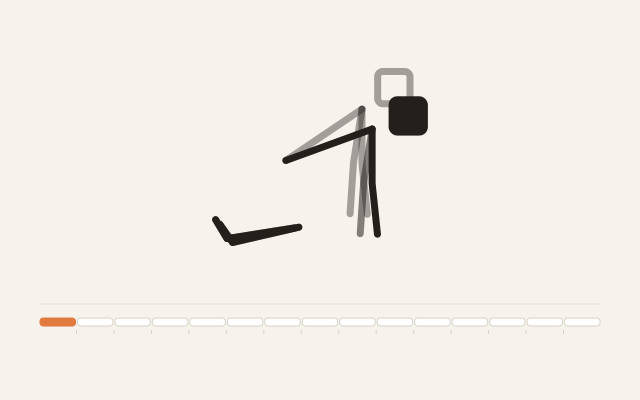
Cat and cow
Cat and cow
Holding · both sides
30:00
1 / 15
Eight rounds. Thirty minutes is a long session — take the warm-up seriously enough that the first real step does not feel like a shock.
15 steps · 30 min

Before you start
General movement information, not medical advice. A calf that is swollen, hot or painful to touch after running, or a hip that pinches at the front in every position, needs assessment rather than a longer routine.
Step table
StepHoldSideWhat you should feel
1. Cat and cow110s + 10sboth sidesEight rounds. Thirty minutes is a long session — take the warm-up seriously enough that the first real step does not feel like a shock.
2. Downward dog105s + 15sboth sidesPedalling the heels slowly, knees as bent as they need to be. This is the bridge from the spine to everything below it.
3. Knee to wall, left110s + 10sleft sideMeasure the left ankle. Runners almost always have less range here than they think, and it is usually the side they land harder on.
4. Knee to wall, right105s + 15sright sideRight side. Write the two numbers down if you are tracking anything — the honest comparison over months is the one that tells you whether this is working.
5. Wall calf, straight leg110s + 10sleft sideLeft leg back, knee straight, heel pressing down. Press rather than lean, and keep the back toes pointing at the wall.
6. Wall calf, bent knee105s + 15sleft sideSame leg, knee bent, heel still down. The lower calf is the one that cramps late in a run, and it only lets go with a bent knee.
7. Low lunge110s + 10sleft sideLeft foot forward, right knee down, tailbone tucked. Halfway through the sequence — the hips get the next six steps.
8. Low lunge105s + 15sright sideRight foot forward. Keep the back glute working at 30% through the whole hold — that is what stops the hip flexor from simply pulling back.
9. Couch stretch, right hip110s + 10sleft sideRight foot up the wall, right knee down. Deeper than the lunge — if the lower back arches, you have gone past what today has.
10. Couch stretch, left hip105s + 15sright sideLeft foot up the wall. Compare the two sides — after thirty minutes the difference between them is the most reliable thing you will have measured all session.
11. Runner lunge with calf110s + 10sleft sideLeft foot forward and flat, right leg back with the knee straight and the heel reaching down. Hip and calf in one position, which is how they load when you run.
12. Standing lunge105s + 15sright sideRight foot forward, sinking straight down. Standing rather than kneeling loads the same muscles the way a stride does — this is the closest thing here to running.
13. Stair drop, both feet110s + 10sboth sidesBalls of the feet on a step edge, heels dropping slowly below. Both feet only, and skip it entirely if the achilles has been talking to you this week.
14. Loaded calf raise105s + 15sboth sidesTwelve slow raises, up over three seconds and down over four. The calf finishes the session working through the range it just gained.
15. Supine full stretch to finish110s + 10sboth sidesLie flat, arms overhead, legs long, and stretch everything twice before you let go. Thirty minutes of work deserves a proper finish rather than standing straight up.

How to run this sequence

Why ankles come first

A stiff ankle changes the whole chain. If the ankle cannot bend forward, the foot pronates more, the calf works harder to stabilise, the knee tracks inward, and the hip has to make up the difference in range — which it does by rotating further than it wants. Thirty minutes is enough time to address the ankle properly at the start rather than pretending it will fix itself once the hips are loose.

Where the two hours after a run fit

The window where tissue is warm and tolerant lasts about an hour after a run, and this sequence is longer than that window. The practical arrangement is:

  • Straight after the run, do the two or three steps that matter most — the wall calf, the knee to wall and the supine hamstring.
  • Save the full thirty minutes for later in the day or for a rest day, when you can go through everything at a slower pace.
  • Do not run this immediately after a hard session at full depth. Reduce every hold by a third and skip the stair drop; the tissue is tired and it will not give you the range anyway.

What to do with the time

Half an hour is long enough that the main risk is drifting. Two things keep it useful: use the long holds to actually practise slow breathing rather than counting seconds, and treat every side-to-side comparison as information — the side that feels tighter at step four is usually still tighter at step fourteen, and knowing that is more valuable than any single stretch in the sequence.

Questions about this sequence

Should I do this on a rest day or a running day?

Either, but the character changes. On a running day it is recovery work and the ranges will be smaller; on a rest day it is range work and the ranges will be bigger. If you are building range, the rest day version is the one that changes things.

Can I split it into two fifteen-minute halves?

Yes, and it is a reasonable way to fit it into a week. Run steps one to seven in the morning and eight to fifteen in the evening — the ankle work and the hip work do not depend on each other, and both halves finish in a sensible place.

Is thirty minutes too long to stretch?

For most tissues, yes — there is no benefit in a single muscle being stretched for thirty minutes. The length here comes from covering many areas, not from holding any one of them for an extreme amount of time. No single hold in this sequence is longer than two minutes.

Other sequences that pair well

Five Minute Deep Calf and Achilles Work — Preview rail

Five Minute Deep Calf and Achilles Work

5 min6 stepsDeepCalves & ankles

The stair drop is the strongest calf stretch there is, because it puts the full body weight through the ankle at the end of its range. That makes it effective and it makes it the one to be careful with. This five-minute version spends its first half preparing the tissue with slow, loaded repetitions and its second half in the drop itself, held only as long as the achilles stays comfortable.

Twenty Minute Hip Flexor Deep Work — Preview rail

Twenty Minute Hip Flexor Deep Work

20 min12 stepsDeepHips

The front of the hip is the hardest place in the body to stretch well, because the position that reaches it most deeply is also the one that most easily jams the joint. This sequence spends twenty minutes on it carefully: it builds up through three progressively deeper positions on each side, with a glute bridge between the sides and a supported counter-pose after each one. It is the sequence to run when you have already tried the ten-minute version and found that the front of your hip did not change.

Fifteen Minute Deep Squat Hold — Preview rail

Fifteen Minute Deep Squat Hold

15 min10 stepsDeepHips

The deep squat is the position that human hips are built to rest in and the one that most people in chairs have lost completely. This sequence does not try to get you into it by force; it spends twelve of its fifteen minutes removing the three things that stop you — a stiff ankle, a tight inner thigh, and a hip that will not rotate — and only then sits you down in the position with support. The last three minutes are spent getting out of it, which is the part that most sequences forget.